The skinny
Problem: The Microsoft path to market is long and labyrinthine with a lot of different players and concerns between design teams and the end users. Designers and researchers largely did not understand it.
Outcome: Much like with our species’ explorations of the solar system, as we conducted this research we found the more we learned the more there was to learn. As such, understanding this ecosystem and presenting it in a way that designers and design teams can make use of is an ongoing project – but the clarity we’ve been able to offer so far is what allows it to keep going.
What was done and why
It’s not uncommon for a product team to wrestle with the tension that can occur between serving customers and serving users when the two groups share little overlap. This often happens with B2B experiences – the products are often bought by business decision makers and then used by the rank and file and the jobs they do are not the same.
B2B at Microsoft tends to complicate this even more. In addition to there being ample daylight between user and customer concerns, there is an extensive partner network that sits in between Microsoft and the customer. Designers and researchers on Microsoft B2B products really ought to be considering the whole system when they do their work, from high level strategy to feature prioritization to information architecture to interaction design.
However these business relationships tend to be a very ‘if you know, you know’ kind of thing. Business stakeholders don’t withhold this information out of malice, they just don’t always understand that it could be relevant to us. Spend a little bit of time talking to them, you figure out there’s a little bit more to it than simple direct sales. Spend enough time, though, and you begin to grasp that there’s so much more to the story; you thought you were holding onto a simple a rope when it’s actually the tail of a gigantic elephant.
So some designers and I embarked on a quest to fully learn about these business relationships, map the players involved, and sought to use it to better educate designers and to be more strategic with where design and research leaned in.

We started off by holding a workshop to understand what we knew and what we didn’t know. I took the lead on scrouging up obscure internal business documents, reports from other researchers, and potentially relevant personas.
We then took what we had and did something akin to co-designing with key stakeholders. We reached out to people we knew who might be in the know about this stuff. We ran them through what we had and what our theory was of how this Partner stuff all worked and used the session to help us correct what we had so far as well gain additional insights that let us build out new knowledge. If they had any suggestions of who we ought to talk to next, we took them and continued on until we felt like we had something solid to bring back to the design community.
What were the results

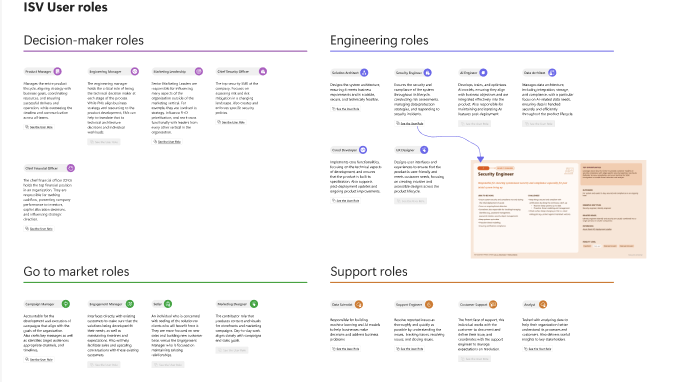
(Apologies for the zoomed out shots; I have to protect confidentiality so just… vibe with it.)
With the help of graphic designers, we fashioned a large journey map that helped our design teams understand how Independent Software Vendors enter into a business relationship with Microsoft and, once engaged, the stages that products go through as they go from our design brains out into the real world. The journey map also highlighted key roles, pain points, and opportunities.
I lead the story-telling effort to turn the journey map into a pitch deck and we did a small tour, giving the presentation to various teams and sharing the journey map we made.

It’s early days but so far the results of this work have been very promising. Not only am I now seen as a SME on the paths our products take to market (in the UX discipline, anyway), I know of at least two design teams that have discovered opportunities in the journey map that they could take advantage of in their product space with design work prioritized and in the works!
 Dustin Hodge